Lanka's King Ravana's grandfather, the great sage Maharishi Pulastya, bestowed eternal religious significance upon this sacred place.
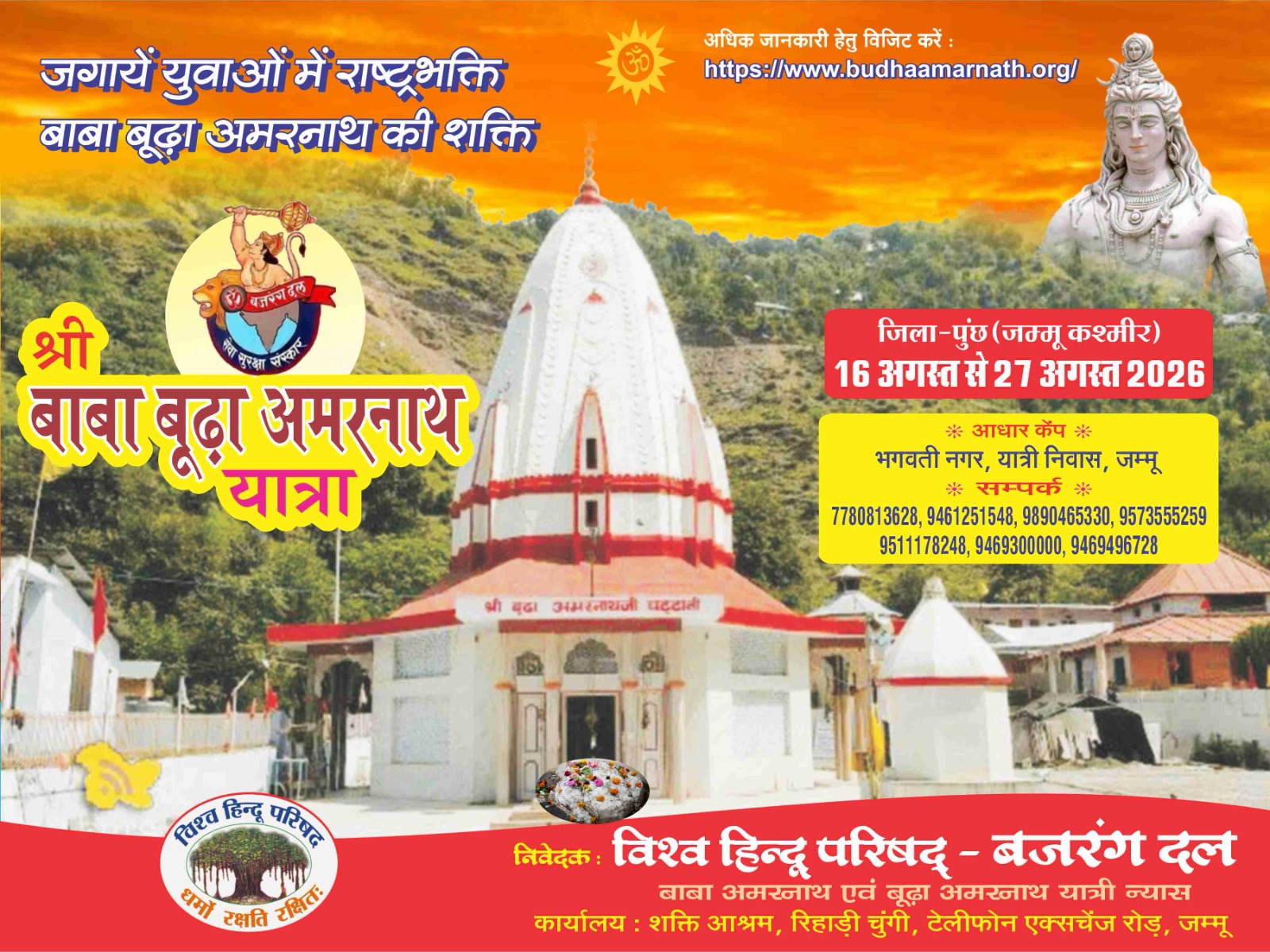
It is said that in the Satyuga era, one day when Maharishi Pulastya was seated in deep meditation, his inner soul became aware that in the Panchal hill range of Kashyap country (present-day Kashmir), there exists a place where Lord Shiva first narrated the Amar Katha (the story of immortality) to Goddess Parvati. Having received this divine knowledge, the next day Maharishi Pulastya arrived at what is today known as Sri Budha Amarnath, and in a small cave formed in a stone, he began intense penance to have the divine darshan of Mahadev Shambhu Bholenath.
Many years passed as Maharishi Pulastya remained absorbed in samadhi. Then one day, Lord Bholenath Shankar, pleased by his tapasya, appeared before him. Seeing the Lord, Pulastya bowed with reverence and praised Him: "O Mahadev, You are compassionate and merciful. Today I am blessed to have Your darshan at this sacred place." Bholenath replied: "O my child, I am extremely pleased by your tapasya. Ask, what do you wish for?"
Pulastya humbly replied: "One upon whom You have given Your own darshan — what more could he possibly need? I am blessed just to see You in person. My life has been fulfilled." When Lord Bholenath repeatedly urged him to make a wish, Pulastya finally beseeched: "O Lord, if You wish to show such grace, then bestow upon this very place — where You have blessed me with Your vision — such religious significance that Your devotees continue to come here for ages upon ages."
Upon Rishi Pulastya's request, Lord Bholenath smiled and said "Tathaastu" (So be it). As He disappeared, in that very single-rock cave, a Swayambhu Shivalinga (self-manifested Shivalinga) appeared — white like a flint stone, with a rocky texture — which is why many Shiva devotees even today call it "Baba Chattani" (The Rocky Baba).
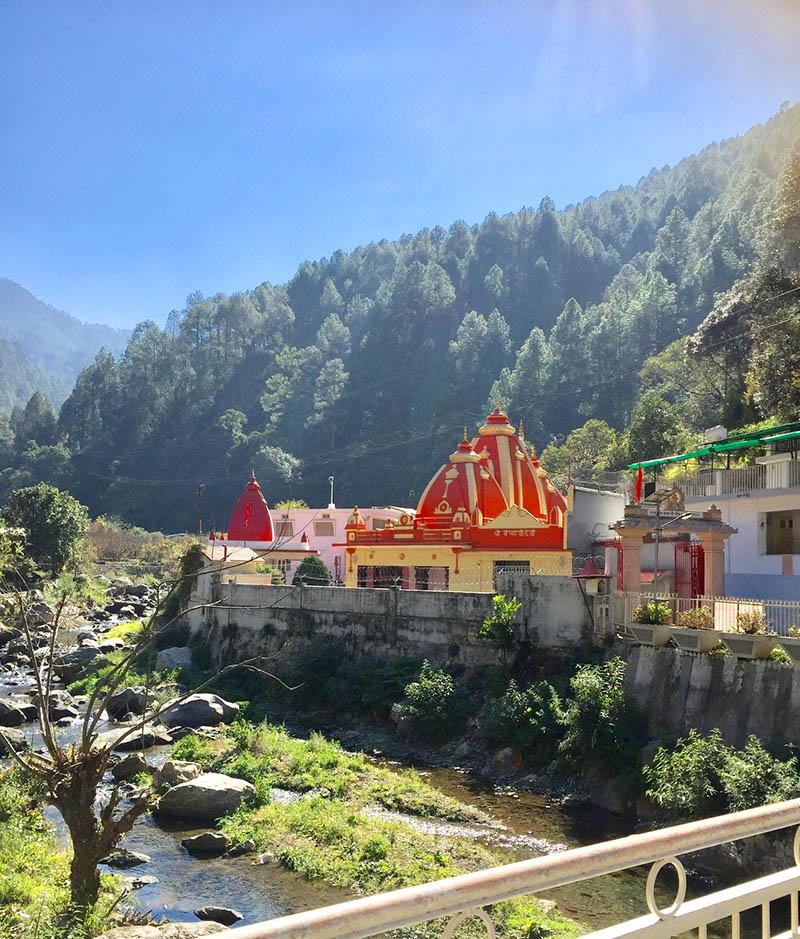
Rishi Pulastya performed tapasya at this place for many years thereafter, and the entire region came to be known as Pulastya Nagari, which through gradual linguistic evolution became "Poonch" today. The river flowing alongside the temple was named Pulastya Ganga — considered the Paap Nashini Ganga (the river that washes away sins) — where thousands of devotees bathe to this day. At Sri Budha Amarnath, Lord Bholenath fulfils every wish made by His devotees.
How the Name "Budha Amarnath" Was Given — The Story of Rani Chandrika
About two thousand years ago, the present-day village of Loran in Poonch district — then known as Lowerkot — was the capital of the Jammu and Kashmir state, which at that time included Kabul, Kandahar, Gilgit, and present-day Jammu & Kashmir. Rani Chandrika ruled over it. Skilled in statecraft, she was extremely compassionate and a devoted Shiva devotee. Every year during Shravan month, she would undertake the pilgrimage to Sri Amarnath cave in Kashmir to worship the Himalinga, and only then would she break her fast.
It is said that once, when the queen was preparing for the Amarnath yatra, suddenly the weather turned bad and heavy snowfall closed all routes. When the weather did not improve for a long time, Rani Chandrika thought Lord Bholenath was displeased with some mistake of hers. With this grief, she gave up food and water, becoming extremely weak within days — unable even to rise from her bed.
Then one day, in the middle of the afternoon, an old sadhu appeared in the queen's room and said: "Why are you suffering just because you could not go to Amarnath? Ten miles from this palace, there is a hidden abode of Lord Bholenath Shiva, whose darshan yields the same merit as the Himalinga of Sri Amarnath. Go and take His darshan."
Moments later, a white-clad sadhu appeared at the palace gates seeking alms. He refused to accept alms from the maids, insisting the queen herself give with her own hands. When the maids went inside, they found the queen standing completely healthy in her room. The queen came to the gate with a plate of alms — and was stunned to recognise the very same sadhu from her dream. The sadhu said: "Do you remember what I told you? Then why delay? Come, let us go for the darshan of Lord Bholenath."
A royal procession followed the sadhu ten miles down through dense forests of chir and deodar. The sadhu marked a spot with his trident. Excavation revealed a temple carved from a single rock — today called Shiv Palki — with four doors, and inside it, the rock Shivalinga of Lord Shiva.
When Rani Chandrika entered the temple with the sadhu for worship, in the blink of an eye the sadhu disappeared. The queen prayed with deep emotion: "O Mahadev, You Yourself brought me to this place. You stayed with me in the form of the old baba, and I — the unfortunate one — could not recognise You, could not comprehend Your glory. You gave me darshan as an old man and protected my life." From that very day, the queen began to call this place Sri Budha Amarnath — and that same name echoes here to this day.
Centuries later, this place became hidden again through natural upheaval. A sadhu from South India, Swami Chandrachoodha Muni, rediscovered it and performed tapasya here for many years, making it the principal centre of spiritual practice for Shiva devotees. His samadhi, built to the east of the temple, remains a living centre of faith for pilgrims to this day.