Om Shrine Overview

Baba Budha Amarnath Mandir

The Chhari Yatra, sacred legends, and the complete story of this ancient Shiva shrine

The Sacred Abode of Maharishi Pulast — A Shrine Revealed from Concealment

Shri Budha Amarnath Mandir owes its religious significance to Maharishi Pulast — the grandfather of Lanka's King Ravana. In the Satya Yuga, while Maharishi Pulast was seated in deep meditation, his inner consciousness revealed to him that within the Panchal mountain ranges of Kashyap Desh lay the very spot where Lord Shiva had first narrated the Amar Katha to Goddess Parvati.

Following this divine revelation, Maharishi Pulast journeyed to what is now Shri Budha Amarnath and began an intense penance inside a small cave formed within a single rock, seeking the darshan of Lord Shiva. After many years of deep meditation, Lord Bholenath was pleased with his devotion and appeared before him — and upon Pulast's prayer, blessed this site to remain sacred for devotees through all ages.

In fulfilment of that divine blessing, a Swayambhu Shivling manifested in the single-rock cave — white as a flint, with the texture of stone — which devotees still lovingly call Baba Chattani to this day.

Upon Pulast's earnest prayer, Lord Bholenath smiled and said "Tathastu" — and manifested as the Swayambhu Shivling within that very rock.

Baba Budha Amarnath Mandir
District reference image
Location

Rajpura, Mandi — in the sacred landscape of Poonch district

Access

Approx. 22 km from Poonch — reachable from Jammu by road

Pulast Ganga

The sacred river beside the temple — bathing here is believed to cleanse sins

Peak Season

Sawan and Raksha Bandhan — the Chhari Yatra draws massive pilgrim gatherings

Chhari Yatra departure

From Poonch's Dashnami Akhada to Shri Budha Amarnath

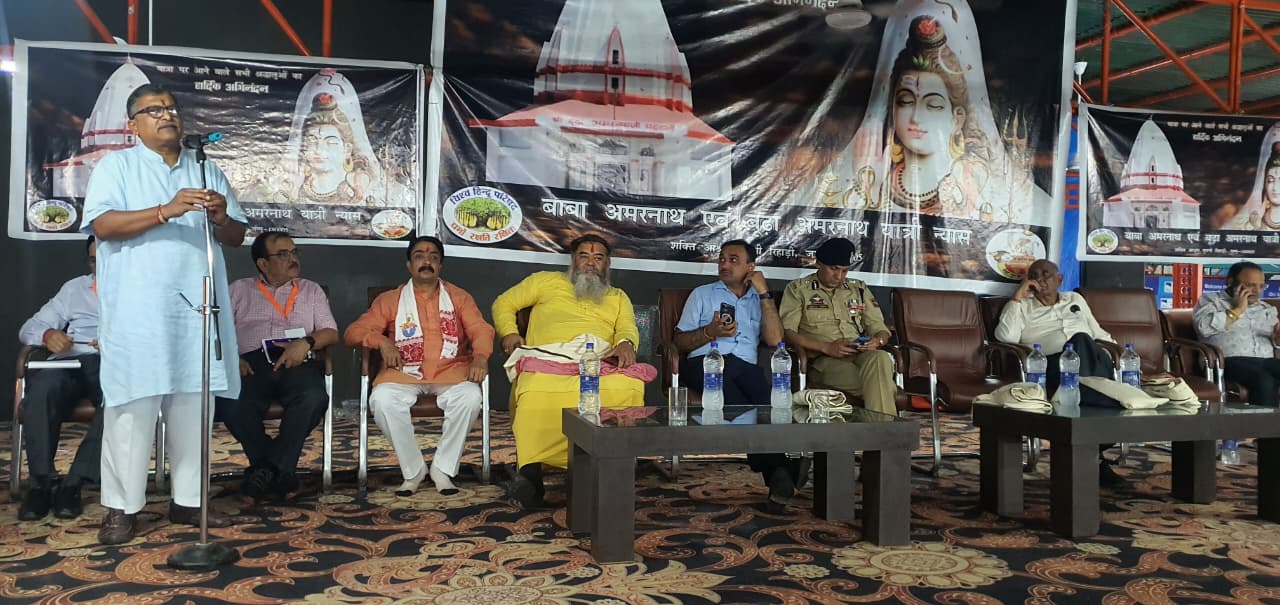
The Chhari puja ceremony is conducted with the participation of district administration officials, sadhus, and local residents. During this sacred ritual — which lasts nearly three hours — saints deliver spiritual discourses. After the ceremony, the holy Chhari is brought outside Shri Dashnami Akhada temple, where Jammu & Kashmir Police personnel render it a Guard of Honour / salute.

The Chhari Yatra then departs for Shri Budha Amarnath in Mandi, accompanied by a band procession. Thousands of men, women, and children make their way on foot or by vehicle towards the divine abode, singing the praises of Lord Shiva. Along the route, various organisations set up free stalls of tea, snacks, and fruits for the Shiva devotees.

The yatra, which sets out from Shri Dashnami Akhada in the morning, reaches Chandak town — the abode of Maa Chandika — between Poonch and Mandi at around 1 p.m., where a local Poonch organisation provides a midday meal to all pilgrims.

After the meal at Chandak, pilgrims resume their journey towards Shri Budha Amarnath, with small groups proceeding while singing bhajans, kirtans, and raising devotional slogans. By 4 p.m., the yatra reaches the temple of Maa Durga, approximately 4 kilometres east of Shri Budha Amarnath, where villagers and the Army serve evening tea to the pilgrims.

The Chhari's Welcome at the Temple and the Three-Day Yatra Mela

About an hour later, the sacred Chhari Yatra arrives at Shri Budha Amarnath temple, where members of the temple trust serve tea to the pilgrims. The Chhari is then received with great honour by the Border Security Force, the temple trust, and the district administration, and is reverentially escorted into the temple precincts. Once again, the police render a formal salute to the Chhari.

Members of the temple trust then formally install the Chhari upon the Baba Chattani Shivling of Lord Budha Amarnath, where it remains until one day after Raksha Bandhan.

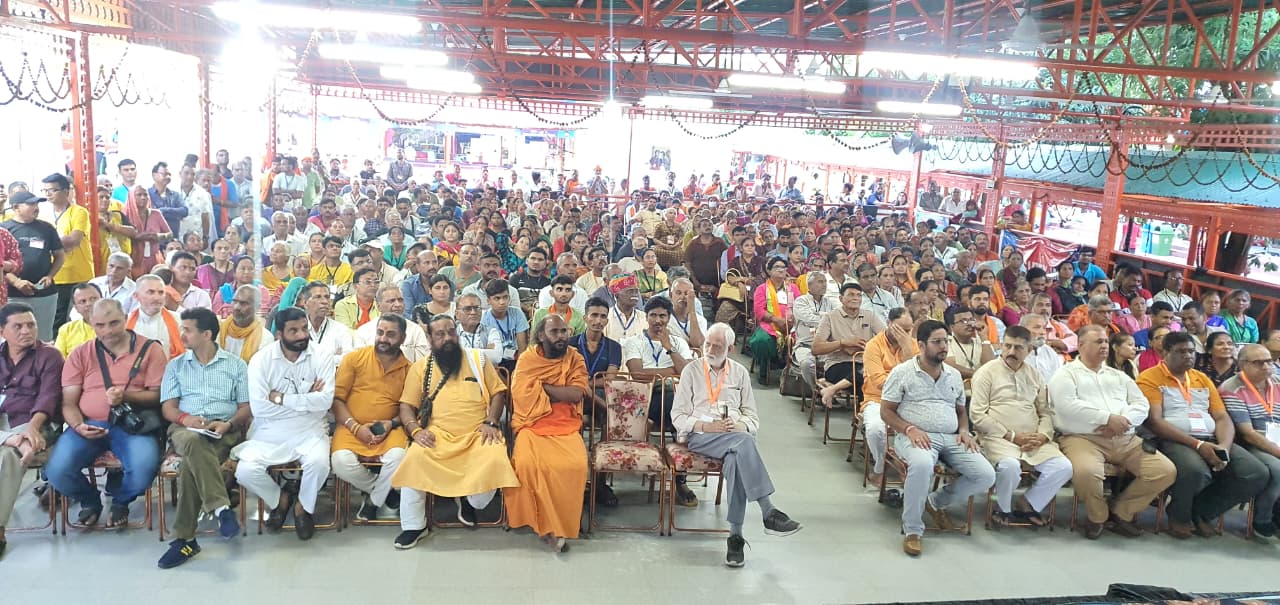
With the arrival of the Chhari Yatra, a three-day yatra and mela commences at the temple and continues until one day after Raksha Bandhan. Every day, large crowds of devotees wait patiently in queues for their turn to take darshan. Throughout this period, every facility for pilgrims is managed by the Shri Budha Amarnath Mandir Trust, district administration, and dozens of social and religious organisations — where people stand ready to receive and serve pilgrims with warmth and devotion.

01
Departure from Bhagwati Nagar, Jammu

Pilgrims board buses with chants of "Har Har Mahadev" heading towards Shri Amarnath. Free breakfast is provided at Sunderbani en route.

02
Night stay in Poonch

On arriving late evening in Poonch, pilgrims are welcomed by the district administration and locals. Free meals and overnight accommodation are arranged at Dashnami Akhada by religious organisations.

03
Darshan at Shri Budha Amarnath, Mandi

The next day, pilgrims travel 22 km by bus to Mandi, bathe, and perform puja at the temple. The temple committee provides free langar year-round. This cycle continues for about 10 days.

Baba Budha Amarnath Yatra — Planning Sabha

Maharishi Pulast's Sacred Abode — From Pulastnagari to Poonch

The divine event of the Satya Yuga that conferred eternal religious significance upon this holy site.

It is said that in the Satya Yuga, Maharishi Pulast received the inner knowledge that within the Panchal mountain ranges of Kashyap Desh lay the very spot where Lord Shiva had first narrated the Amar Katha to Goddess Parvati. After this revelation, he came to what is now Shri Budha Amarnath and began an intense penance inside the cave of a single rock slab.

After many years of deep meditation, Lord Bholenath appeared, pleased by his devotion. Pulast said — "Mahadev! My life has been fulfilled by your darshan." When Lord Shiva repeatedly urged him to ask for a boon, Pulast humbly prayed —

"O Lord! Grant this place — where you have blessed me with your darshan — such religious significance that your devotees may continue to come here through all ages."

Lord Bholenath smiled and said "Tathastu" — and a Swayambhu Shivling manifested within the single-rock cave: white as flint, with the texture of a rock — which devotees still call Baba Chattani to this day.

After receiving the boon, Maharishi Pulast performed penance at this site for many years. As a result, the entire region came to be known as Pulastnagari, which gradually became Poonch through linguistic evolution over time.

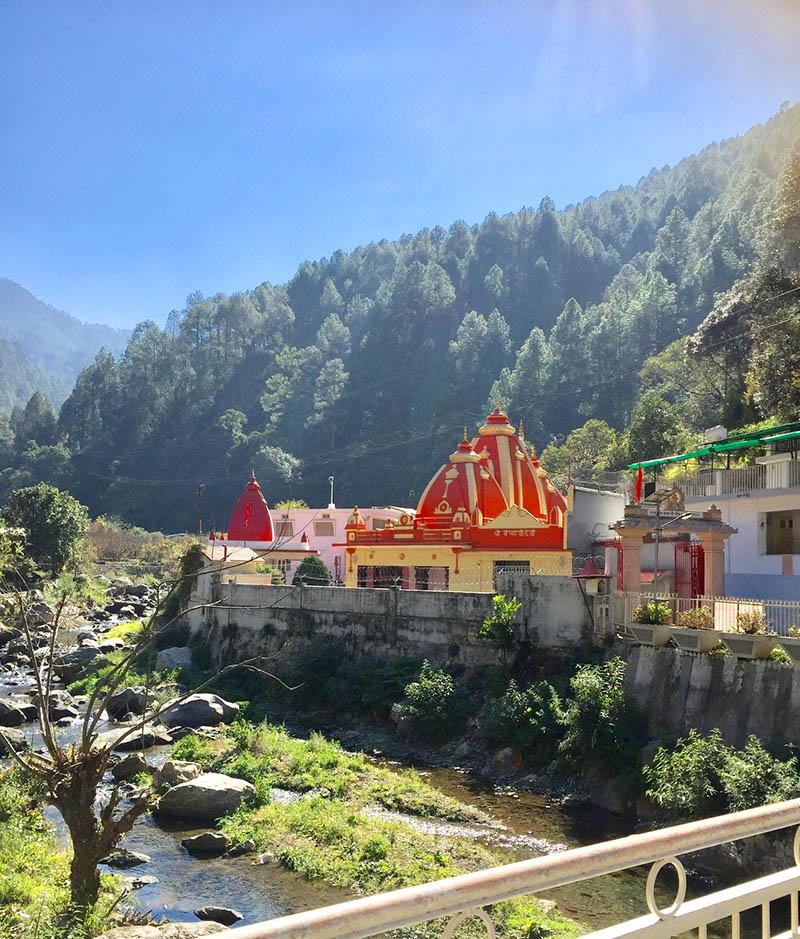
The river flowing alongside Shri Budha Amarnath Mandir came to be called Pulast Ganga — still regarded as the sin-destroying Ganga — where thousands of devotees bathe to this day. Every sincere prayer offered at Shri Budha Amarnath is fulfilled by Lord Bholenath.

Swayambhu Shivling

Baba Chattani — the self-manifested divine form of Lord Shiva within a single rock

Pulast Ganga

The sacred river believed to cleanse sins — an ancient tradition of ritual bathing

Queen Chandrika and the Manifestation of the Old Sage

The event from nearly two thousand years ago that gave this shrine the name "Budha Amarnath".

Nearly two thousand years ago, the present-day village of Loran in Poonch district was known as Lowankorte — the capital of the then Jammu & Kashmir state, which included Kabul, Kandahar, Gilgit, and present-day J&K. It was ruled by the deeply compassionate and Shiva-devoted Queen Chandrika.

Queen Chandrika would break her fast every year only after performing puja at the Himalayan ice-Shivling at Shri Amarnath Cave in Kashmir during the Sawan month. One year, as she was preparing for the journey, a sudden heavy snowfall blocked all routes from Lowankorte to Amarnath. When the weather showed no signs of improving, the Queen thought — "Lord Bholenath must be displeased with some mistake of mine" — and she gave up all food and water. Within days she became extremely weak.

Then one day, in her chamber, the Queen saw an old sage who told her —

"Queen, ten miles from this palace lies a hidden shrine of Lord Bholenath Shiva, whose darshan yields the same spiritual merit as the ice-Shivling of Shri Amarnath. Go and seek his darshan."

Shortly after, the same sage appeared at the palace gate in white robes, seeking alms — but only from the Queen's own hands. The maids said — "Maharaj, the Queen is far too weak, she cannot even rise from her bed." When they went inside to inform her, they were astonished to find the Queen standing in her chamber completely restored to health.

Shri Budha Amarnath Mandir

The Queen brought the offering herself and, upon seeing the sage at the door, recognised him instantly as the one who had appeared in her vision. The sage said — "Do you remember what I told you? Then why the delay — let us go to Lord Bholenath."

At the Queen's command, a royal procession with palanquin and soldiers set out with the old sage. Ten miles below the palace, deep in a forest of pine and deodar trees, the sage marked a spot with his trident. On excavation, a temple emerged from within a single rock — now called the Shiva Palki — with four doors, containing Lord Shiva's rock Shivling within.

The moment Queen Chandrika entered the temple for worship — the old sage disappeared. The Queen wept in devotion — "O Mahadev! You yourself brought me here, you walked with me as the old Baba, and I, in my ignorance, could not recognise you. You saved my life by taking the form of an old man." From that very day, the Queen began calling this site "Shri Budha Amarnath" — and that name is spoken to this day.

Shri Budha Amarnath — Yatra Mahasabha

Swami Chandrachudh Muni — The Sage Who Revealed the Shrine Again

The site discovered by Queen Chandrika was once again concealed after several centuries due to natural upheaval and change wrought by divine will.

Thereafter, a sage from South India — Swami Chandrachudh Muni — rediscovered and revealed this holy site and performed penance here for many years. The shrine has since remained the foremost centre of spiritual practice for the devotees of Lord Shiva.

Alongside this temple, to the east, stands the Samadhi of Swami Chandrachudh Muni — itself a centre of deep faith and reverence for devotees visiting the shrine.

01
Maharishi Pulast — Satya Yuga

Manifestation of the Swayambhu Shivling — the origin of Pulastnagari (Poonch) and the Pulast Ganga river.

02
Queen Chandrika — approx. 2,000 years ago

Lord Shiva appeared as an old sage — the discovery of the hidden shrine and the origin of the name "Budha Amarnath".

03
Swami Chandrachudh Muni — Medieval period

Rediscovery of the shrine by a South Indian sage — his Samadhi stands to the east of the temple.

The Complete Legend of Sri Budha Amarnath

From Maharishi Pulastya's tapasya in the Satya Yuga to the divine grace of Rani Chandrika — the full story behind this holy name.

Lanka's King Ravana's grandfather, the great sage Maharishi Pulastya, bestowed eternal religious significance upon this sacred place.

It is said that in the Satyuga era, one day when Maharishi Pulastya was seated in deep meditation, his inner soul became aware that in the Panchal hill range of Kashyap country (present-day Kashmir), there exists a place where Lord Shiva first narrated the Amar Katha (the story of immortality) to Goddess Parvati. Having received this divine knowledge, the next day Maharishi Pulastya arrived at what is today known as Sri Budha Amarnath, and in a small cave formed in a stone, he began intense penance to have the divine darshan of Mahadev Shambhu Bholenath.

Many years passed as Maharishi Pulastya remained absorbed in samadhi. Then one day, Lord Bholenath Shankar, pleased by his tapasya, appeared before him. Seeing the Lord, Pulastya bowed with reverence and praised Him: "O Mahadev, You are compassionate and merciful. Today I am blessed to have Your darshan at this sacred place." Bholenath replied: "O my child, I am extremely pleased by your tapasya. Ask, what do you wish for?"

Pulastya humbly replied: "One upon whom You have given Your own darshan — what more could he possibly need? I am blessed just to see You in person. My life has been fulfilled." When Lord Bholenath repeatedly urged him to make a wish, Pulastya finally beseeched: "O Lord, if You wish to show such grace, then bestow upon this very place — where You have blessed me with Your vision — such religious significance that Your devotees continue to come here for ages upon ages."

Upon Rishi Pulastya's request, Lord Bholenath smiled and said "Tathaastu" (So be it). As He disappeared, in that very single-rock cave, a Swayambhu Shivalinga (self-manifested Shivalinga) appeared — white like a flint stone, with a rocky texture — which is why many Shiva devotees even today call it "Baba Chattani" (The Rocky Baba).

Rishi Pulastya performed tapasya at this place for many years thereafter, and the entire region came to be known as Pulastya Nagari, which through gradual linguistic evolution became "Poonch" today. The river flowing alongside the temple was named Pulastya Ganga — considered the Paap Nashini Ganga (the river that washes away sins) — where thousands of devotees bathe to this day. At Sri Budha Amarnath, Lord Bholenath fulfils every wish made by His devotees.

Om

How the Name "Budha Amarnath" Was Given — The Story of Rani Chandrika

About two thousand years ago, the present-day village of Loran in Poonch district — then known as Lowerkot — was the capital of the Jammu and Kashmir state, which at that time included Kabul, Kandahar, Gilgit, and present-day Jammu & Kashmir. Rani Chandrika ruled over it. Skilled in statecraft, she was extremely compassionate and a devoted Shiva devotee. Every year during Shravan month, she would undertake the pilgrimage to Sri Amarnath cave in Kashmir to worship the Himalinga, and only then would she break her fast.

It is said that once, when the queen was preparing for the Amarnath yatra, suddenly the weather turned bad and heavy snowfall closed all routes. When the weather did not improve for a long time, Rani Chandrika thought Lord Bholenath was displeased with some mistake of hers. With this grief, she gave up food and water, becoming extremely weak within days — unable even to rise from her bed.

Then one day, in the middle of the afternoon, an old sadhu appeared in the queen's room and said: "Why are you suffering just because you could not go to Amarnath? Ten miles from this palace, there is a hidden abode of Lord Bholenath Shiva, whose darshan yields the same merit as the Himalinga of Sri Amarnath. Go and take His darshan."

Moments later, a white-clad sadhu appeared at the palace gates seeking alms. He refused to accept alms from the maids, insisting the queen herself give with her own hands. When the maids went inside, they found the queen standing completely healthy in her room. The queen came to the gate with a plate of alms — and was stunned to recognise the very same sadhu from her dream. The sadhu said: "Do you remember what I told you? Then why delay? Come, let us go for the darshan of Lord Bholenath."

A royal procession followed the sadhu ten miles down through dense forests of chir and deodar. The sadhu marked a spot with his trident. Excavation revealed a temple carved from a single rock — today called Shiv Palki — with four doors, and inside it, the rock Shivalinga of Lord Shiva.

When Rani Chandrika entered the temple with the sadhu for worship, in the blink of an eye the sadhu disappeared. The queen prayed with deep emotion: "O Mahadev, You Yourself brought me to this place. You stayed with me in the form of the old baba, and I — the unfortunate one — could not recognise You, could not comprehend Your glory. You gave me darshan as an old man and protected my life." From that very day, the queen began to call this place Sri Budha Amarnath — and that same name echoes here to this day.

Centuries later, this place became hidden again through natural upheaval. A sadhu from South India, Swami Chandrachoodha Muni, rediscovered it and performed tapasya here for many years, making it the principal centre of spiritual practice for Shiva devotees. His samadhi, built to the east of the temple, remains a living centre of faith for pilgrims to this day.
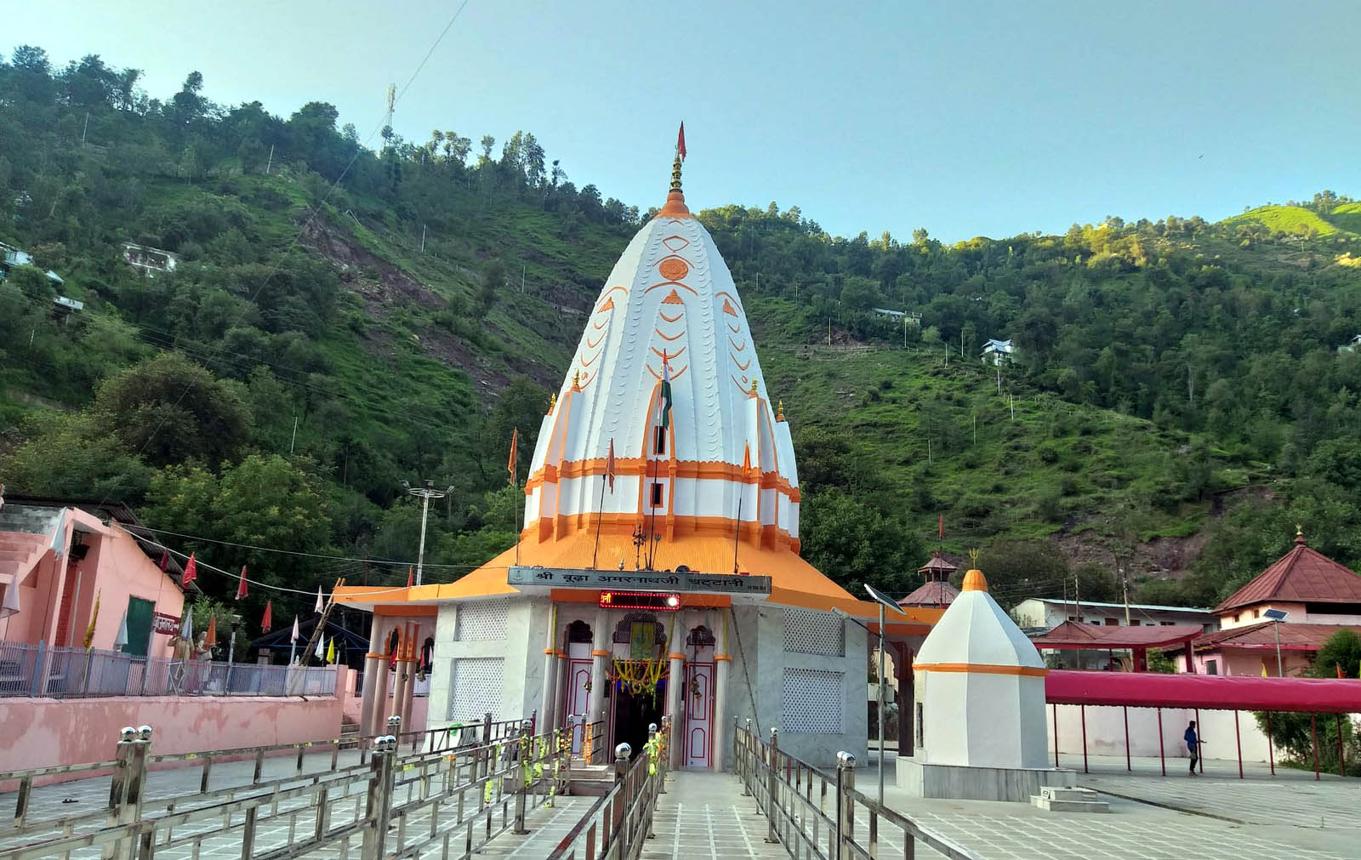

Four qualities for which this shrine is known

Recurring elements from sacred legends, local memory, and the living experience of pilgrims.

Swayambhu Shivling

The self-manifested Shivling that emerged from a single rock — revered for centuries as "Baba Chattani" — is the sacred heart of this shrine.

The Four-Doored Shrine

The temple carved within a single rock has four doors opening in four directions — a symbol of welcome, inclusiveness, and shared devotion.

Pulast Ganga

The holy river flowing beside the temple is believed to wash away sins — thousands of pilgrims bathe here before darshan as part of an ancient tradition.

Chhari Yatra Tradition

The sacred Chhari procession that departs from Dashnami Akhada in Poonch links this shrine to a living, unbroken pilgrimage tradition.

Move from shrine knowledge to yatra planning

Read the sacred history on the history page, or open the yatra page for route, timing, facilities, and travel preparation.